Of course it depends on what you wanna play and how you're gonna tune it. But if you're gonna stick with A6 and an easily re-tuned C6, more or less like this (lo-hi):
Code: Select all
C6      F(4)    A(6)    C(1)    E(3)    G(5)    A(6)    C(1)    E(3)
A6      F#(6)   A(1)    C#(3)   E(5)    F#(6)   A(1)    C#(3)   E(5)
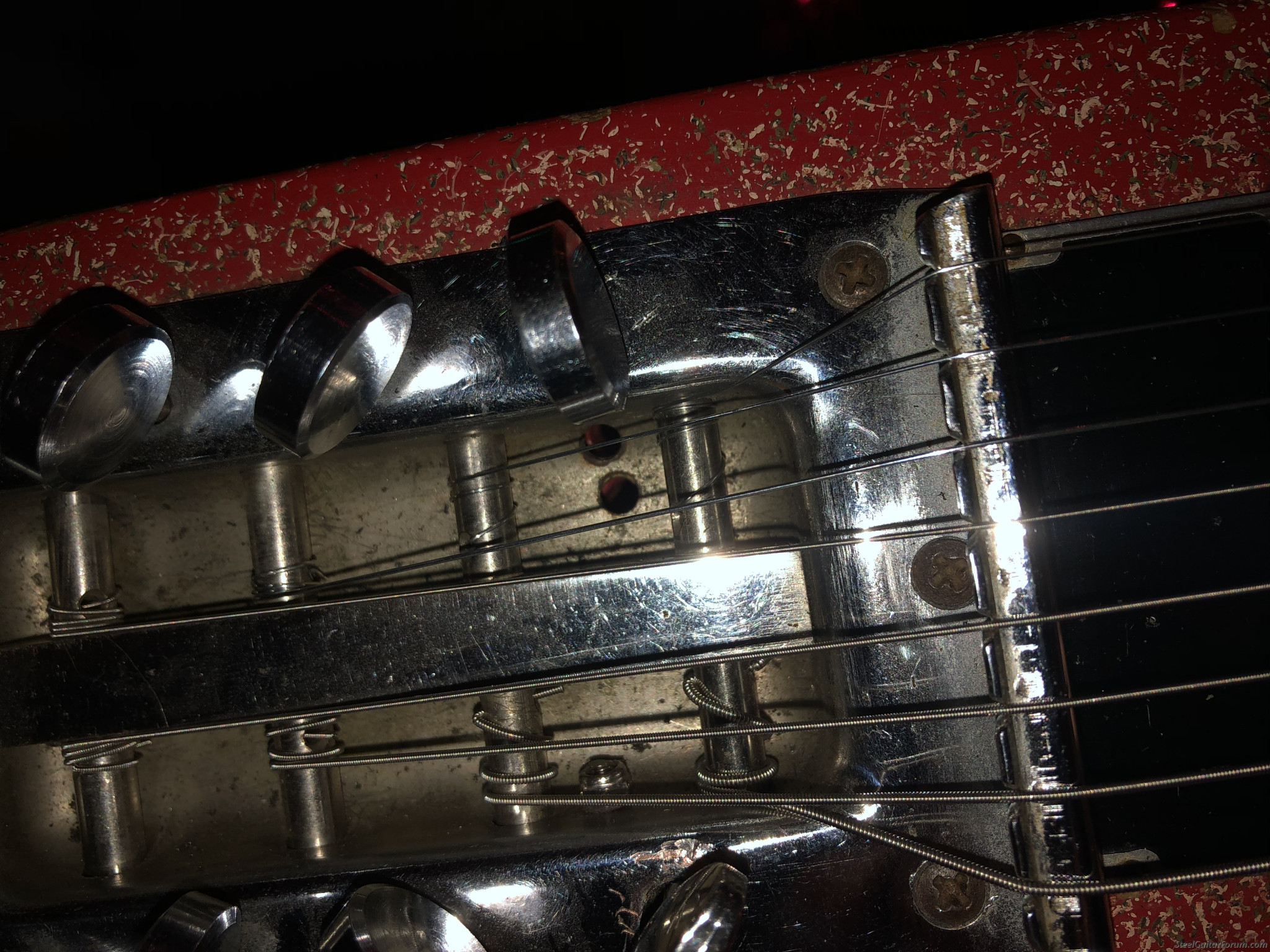
and I wanted to do something subtle to add to the tuning, I would probably first put a string 2 single-raise raise on a pedal.
In C6 this would give C=>C# and an automatic switch to A13 on the first 5 strings in pedals-down position. And if A6 is tuned normally except string 2 goes to C instead of C#, then the pedal-down position is your standard A6, and in pedal-up position you get D9 on the first 5 strings with the F#/A/C diminished triad on strings 2-4. Or if you wanna tune A6 normally, the raise gives you D and a 4 chord on strings 2-5 or sus4 on the top 5 strings.
If I was gonna add a pull to string 3, I'd probably just stick the obvious single-raise there too. This would give the A=>Bb, or 6=>b7 change on C6 for a C7 chord and 1=>#1 for an F#7 chord on A6. And one can re-tune that string up or down for different views of its function. There's a lot on a 6th tuning that a single change up or down can give.
I personally wouldn't mess with a plunger to get a lower. Instead, if I wanted a lower, I'd think backwards like Sneaky Pete and tune it in the "normal" tuning with pedal-down, and then back off the pedal to get the lower. It's not a pedal steel, and not, IMO, well-suited for any type of drastic or complex changes. Anyway, I play E9 pedal steel too and I see no need to replicate that on a console steel. I think one could deal with string breakage or not returning to pitch on a real simple change like this by perhaps slightly lightening the string gauge (use the string gauge appropriate for the highest note you want) and using plenty of Tri-Flow at the nut.
If you wanted to drill more holes, you could extend that to the lower strings, or do something else with them. But I would find even just these simple and easy-to-implement string 2 and/or string 3 changes very useful, especially on swing, blues, and so on.
I have an early-50s D8 Dual Pro with nice original finish - it's too nice to do this to it. I also have an orphan single long-scale Stringmaster 8-string neck with legs that Erv Niehaus refinished (very nicely I might add) that I have considered drilling a hole or two in for something like this to make it a bit more versatile as a single-neck
non-
pedal guitar. It's tuned exactly as above. But it's such a gorgeous guitar that I haven't done it at this point. I hate cutting into the wood on a vintage guitar of any type. Call it a foible. I had a great '53 Les Paul Gold Top with shallow neck angle and trapeze tailpiece with strings that went under the bridge. It was a truly great guitar with that exception, but I refused to do the obvious thing and reset the neck to a proper angle and put a wraparound bridge on it. So I traded it and now they're 20-30 grand and up. So maybe I'll cut the holes in the refin! Ya' got me thinkin'.

 .
.