Location: More idle ramblings from South Australia
State/Province: -
Country: United States
Postby Guy Cundell »
Cheers, Miles. Of course David, no transposition needed for G6. Didn't think of that. I have come to think of A6 as tenor instrument compared to C6 which would be alto. I guess that makes G6 a baritone.
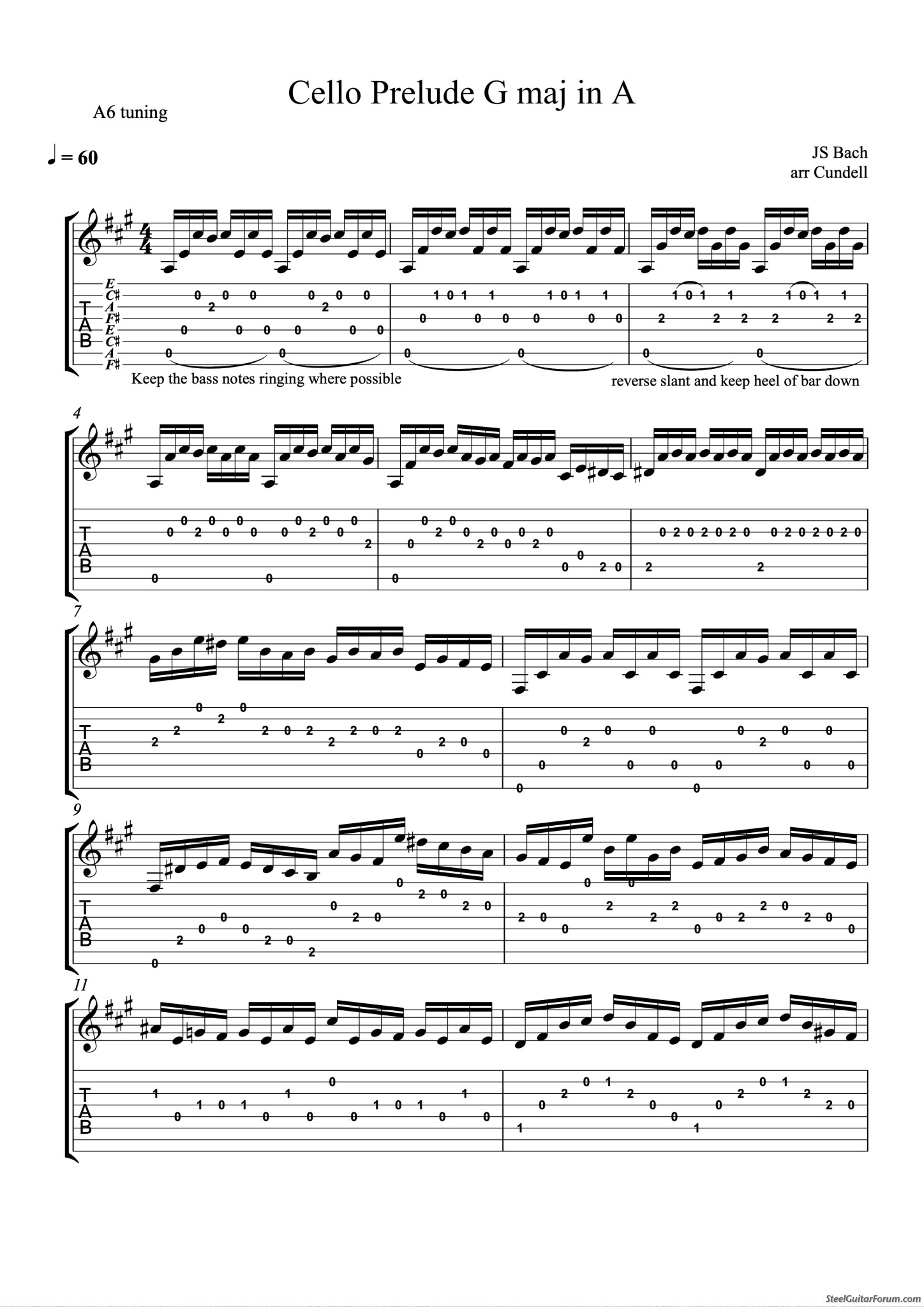
Here is a treble clef version, Bill. Transposed up an octave, of course.
I think part of Bach's solo appeal is the rubato timing and making it yours.. I only play piano every few months and only one piece, 2nd prelude from Well Tempered Clavier, so i play the treble clef bit from that on different instruments, guitar, clarinet, cello, etc. I tried on c6 lap steel once and it didn't go well.. I'll have to try this.
Is teh original in tenor clef? I have a little trouble with that.
- keyless Sonny Jenkins laps stay in tune forever!; Carter PSG
- The secret sauce: polyester sweatpants to buff your picks, cheapo Presonus channel strip for preamp/EQ/compress/limiter, Diet Mountain Dew
This is seriously impressive, Guy! I tried to arrange it for C6th a few years ago, but never made it sound good. I just pulled out my notes, which sort of peter out around bar 24. Your arrangement is much more playable. Thanks!
Location: More idle ramblings from South Australia
State/Province: -
Country: United States
Postby Guy Cundell »
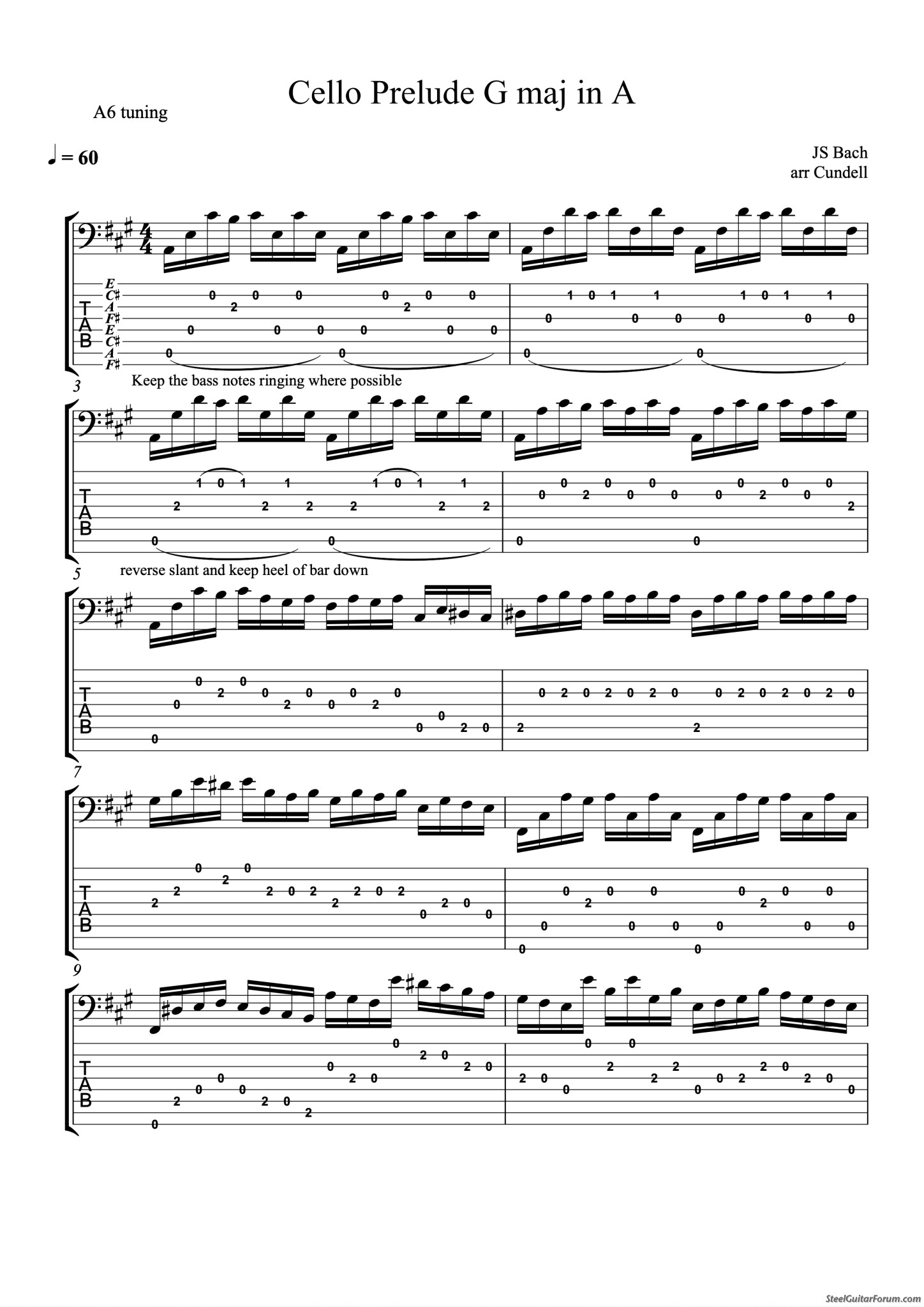
Cheers, Gene. The original, as discovered by a 13 year old Pablo Casals in a music shop in 1890, was in bass clef. (see below)
Ricky, I think the trick was to find the right key for the tuning. The original, in G, makes solid use of the cello's open strings, C G D & A. Obviously, A6 doesn't have the same lower range but I went for the same effect as much as possible. The octave displacement of the lowest notes is a compromise but it seems to work OK.
With the same mindset, I did this arrangement for the uke in C that seems to be satisfactory.