Dennis Detweiler wrote:If it's the axle, you'd think the guitar would de-tune sharp if lowering the E's or lowering E's and B's at the same time? That's, if it has anything to do with string tension?
Absolutely. My guitars all go sharp when lowering a string. Lower the the E's and the 6th string (especially) goes sharp by 4 cents in a typical case. That doesn't seem like it could be cabinet drop, or 'cabinet raise' I guess -- there's no
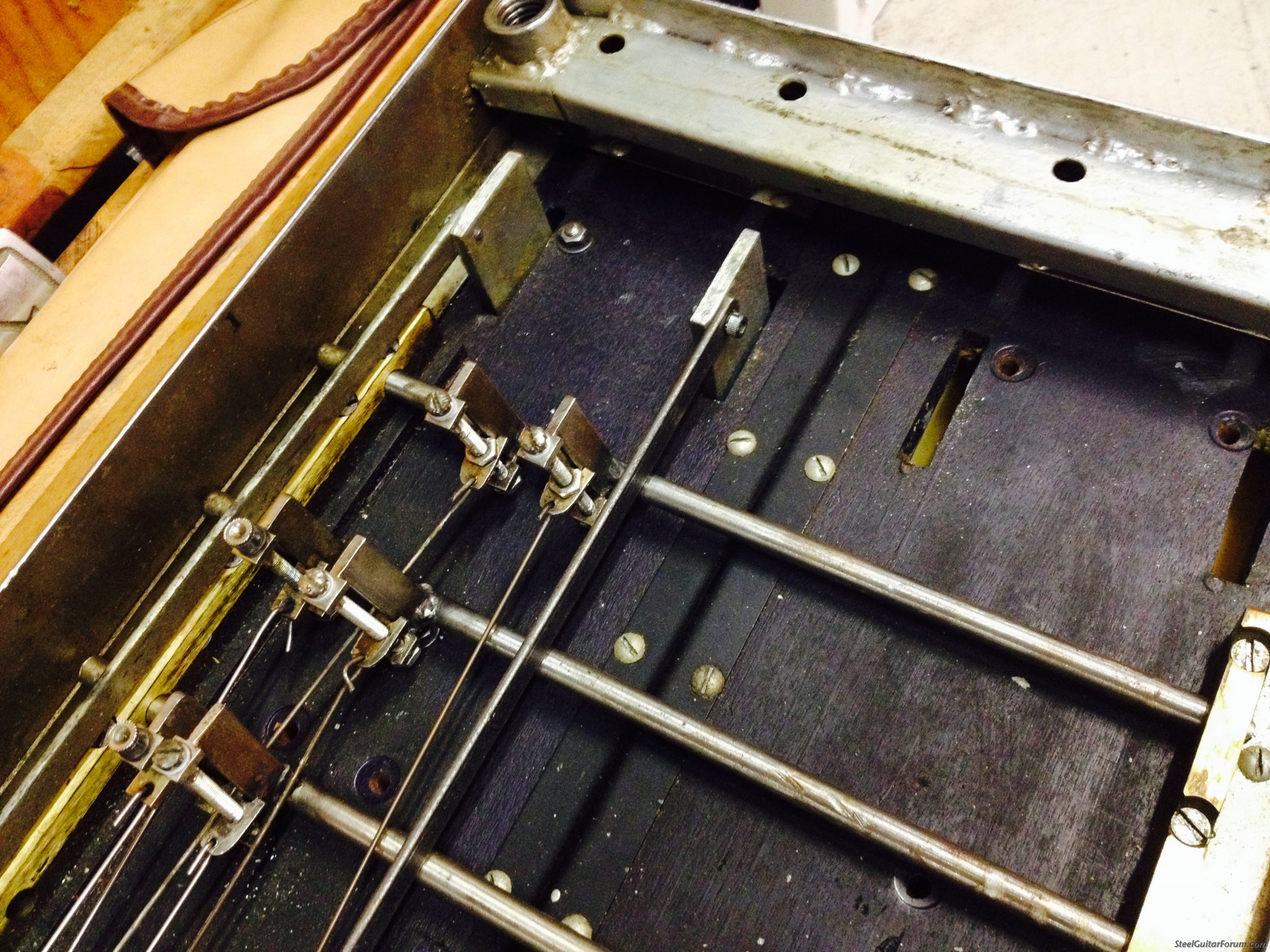
downward pressure when using a knee lever and I doubt the cabinet can 'decompress' from end-to-end to introduce that sharpness to the strings. But the axle does have slightly less pressure on it, both downward and east to west...
I measured one well-known student guitar and the 6th string shot up by a full 6 cents (and it was a
wound string)! It's only a big deal if you don't 'tune around' it. Unfortunately, most new players just use a chart and don't make ear-tweaks to intervals that are out. And I know of no charts that have that particular assumption built in that says "the 6th string is going to go maybe 4 cents sharp when lowering another string." Meaning, their G#m chord is always out. Maybe WAY out if their roots and fifths really do land 6 cents off from what was assumed by the chart writer.
I don't think this "Either/Or" debate is an accurate framing of the issue.
Clearly, detuning can be different things on different guitars. A little cab drop on some. Some axle flex on others, and often it's a combination that adds up to something meaningful. And then a few have no detuning to speak of.
An S-12 guitar will usually have more detuning than the same brand/model of the S-10 and D-10 version (the
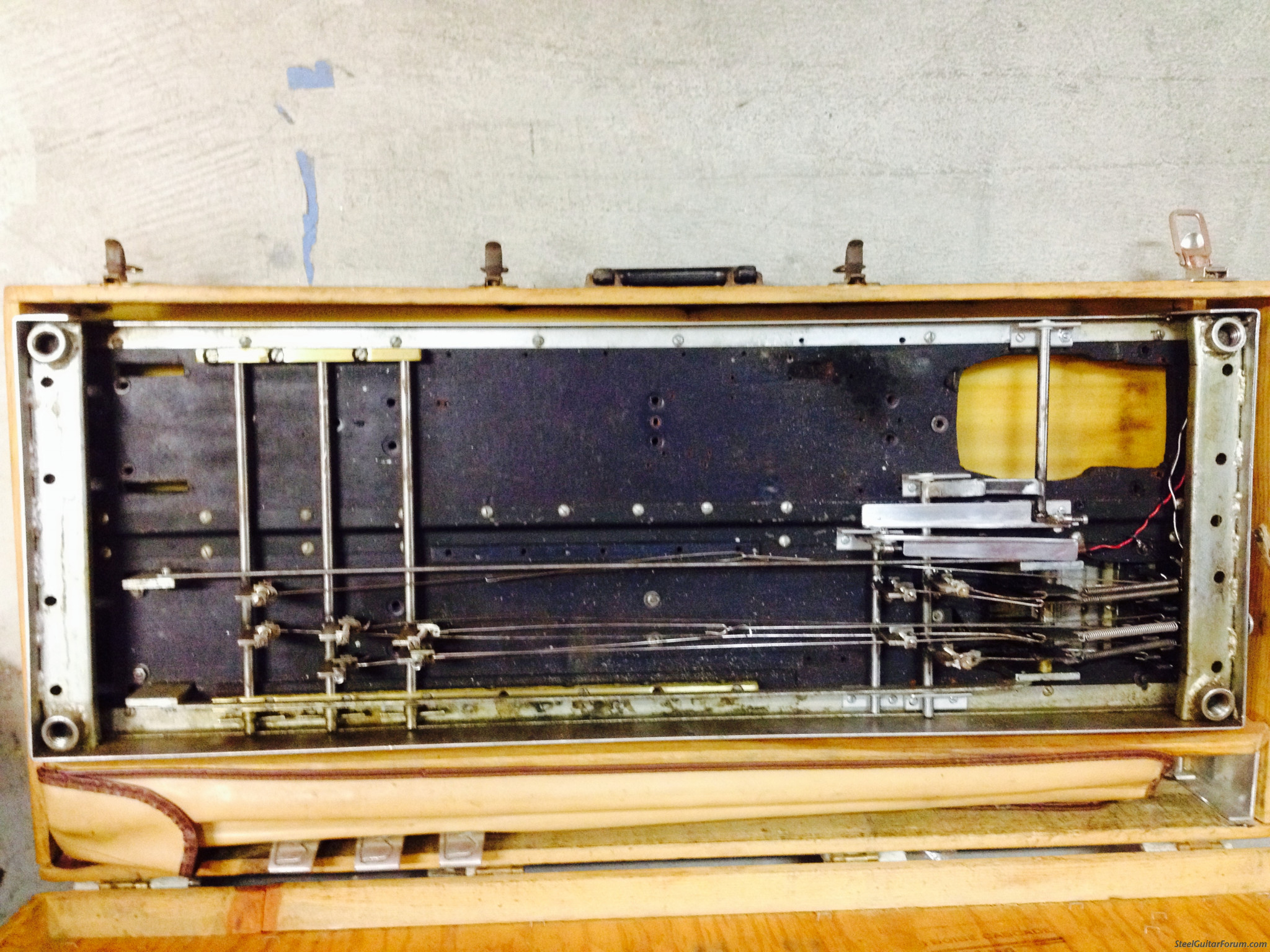
additional detuning introduced over the other models by the longer axle points to axle flex. Meanwhile, if the wider
cab of the S-12 over the S-10 was the cause, then the D-10 would have the most detuning of all -- but it doesn't. The one with the most detuning is the one with the longest axle).
Some of the tests to determine how much is being contributed by one or the other have been mentioned: test the cabinet by pressing down on it in the middle and see if the strings go flat.
Then raise a string by pushing on a raise finger with a screwdriver at the changer end. If strings go flat, that's probably axle flex (or loose changer mounting ... or something with the fingers unrelated to a change in the actual
cabinet).