What is easiest 6 string lap tuning for a rank beginner
Moderator: Brad Bechtel
-
Richard Lahr
- Posts: 59
- Joined: 3 Apr 2013 8:10 am
- Location: Gulf Cove Florida, USA
- State/Province: Florida
- Country: United States
What is easiest 6 string lap tuning for a rank beginner
I tried the C6 and am sort of... well pretty overwhelmed... any sugestions for a county music lovin beginner ???
-
Peter den Hartogh

- Posts: 1001
- Joined: 27 Mar 2010 12:49 pm
- Location: Cape Town, South Africa
- State/Province: -
- Country: United States
Easiest 6 string lap tuning.
[tab]
Strings from high to low:
1 - E - same as guitar string 1
2 - E - same as guitar string 1
3 - E - same as guitar string 4 but tuned up to E
4 - E - same as guitar string 4 but tuned up to E
5 - E - same as guitar string 6
6 - E - same as guitar string 6
[/tab]
MOST PEOPLE PLAY STEEL, NOT BECAUSE IT IS EASY,
BUT BECAUSE IT IS HARD. (J.F.KENNEDY)
[tab]
Strings from high to low:
1 - E - same as guitar string 1
2 - E - same as guitar string 1
3 - E - same as guitar string 4 but tuned up to E
4 - E - same as guitar string 4 but tuned up to E
5 - E - same as guitar string 6
6 - E - same as guitar string 6
[/tab]
MOST PEOPLE PLAY STEEL, NOT BECAUSE IT IS EASY,
BUT BECAUSE IT IS HARD. (J.F.KENNEDY)
-
Peter Jacobs

- Posts: 1027
- Joined: 4 Aug 1998 11:00 pm
- Location: Northern Virginia
- State/Province: West Virginia
- Country: United States
Nyuk nyuk nyuk -- talk about a power chord! But seriously folks...
Richard, I've never played C6, but from what I've read here, once you get over the intial hump, it will open up and make more sense. Otherwise, I can suggest Open G (Dobro tuning), which will have a country/bluegrass sound and can also handle some blues.You'll probably need different string gauges, though.
Richard, I've never played C6, but from what I've read here, once you get over the intial hump, it will open up and make more sense. Otherwise, I can suggest Open G (Dobro tuning), which will have a country/bluegrass sound and can also handle some blues.You'll probably need different string gauges, though.
-
Bob Russell

- Posts: 521
- Joined: 1 Jun 2011 10:14 pm
- Location: Virginia, USA
- State/Province: Virginia
- Country: United States
Are you coming to steel from 'standard' guitar? Something like E major (EBEG#BE, lo to hi) or E7 (BDEG#BE, lo to hi) might be easier to get into at first. There are some good old-school country licks in E7 too. If you have a standard C6 set of strings on the guitar already, E7 is easy to retune to without changing strings.
-
Doug Beaumier

- Posts: 16061
- Joined: 4 Aug 1998 11:00 pm
- Location: Northampton, MA
- State/Province: Massachusetts
- Country: United States
Yeah, I agree. If you play regular guitar you might like the E tuning to start out. It's somewhat limited though, so eventually you'll want to switch over to one of the 6th tunings for full (3 note) minor chords, majors, 6ths. C6 is is a good all round tuning. Especially if you learn to use bar slants. Any 6th tuning will sound "Hawaiian" if you strum across all the strings... you need to skip the 6th tone (A on the C6 tuning) for major chords and pick it for minor chords. Learning to play bar slants is also important. There's a lot of "Country" in C6 once you learn some of the basics.
-
Richard Lahr
- Posts: 59
- Joined: 3 Apr 2013 8:10 am
- Location: Gulf Cove Florida, USA
- State/Province: Florida
- Country: United States
I had it tuned to open G like my dobro (with the correct strings) but then after asking on the forum got a slew of suggestions to go to C6 went and got the strings and retuned. Yea.. whats with that EEEEE nonsense!Peter Jacobs wrote:Nyuk nyuk nyuk -- talk about a power chord! But seriously folks...
Richard, I've never played C6, but from what I've read here, once you get over the intial hump, it will open up and make more sense. Otherwise, I can suggest Open G (Dobro tuning), which will have a country/bluegrass sound and can also handle some blues.You'll probably need different string gauges, though.
-
Richard Lahr
- Posts: 59
- Joined: 3 Apr 2013 8:10 am
- Location: Gulf Cove Florida, USA
- State/Province: Florida
- Country: United States
Nope... know nothing about playing regular guitar..only pickin my open G dobroDoug Beaumier wrote:Yeah, I agree. If you play regular guitar you might like the E tuning to start out. It's somewhat limited though, so eventually you'll want to switch over to one of the 6th tunings for full (3 note) minor chords, majors, 6ths. C6 is is a good all round tuning. Especially if you learn to use bar slants. Any 6th tuning will sound "Hawaiian" if you strum across all the strings... you need to skip the 6th tone (A on the C6 tuning) for major chords and pick it for minor chords. Learning to play bar slants is also important. There's a lot of "Country" in C6 once you learn some of the basics.
-
Brad Bechtel

- Moderator
- Posts: 8575
- Joined: 4 Aug 1998 11:00 pm
- Location: San Francisco, CA
- State/Province: California
- Country: United States
Why not use open G tuning on your electric lap steel if you're already used to it on your acoustic lap steel?
Brad’s Page of Steel
A web site devoted to acoustic & electric lap steel guitars
A web site devoted to acoustic & electric lap steel guitars
-
Mark Eaton
- Posts: 6216
- Joined: 15 Apr 2005 12:01 am
- Location: Sonoma County in The Great State Of Northern California
- State/Province: California
- Country: United States
The good thing about Open G tuning is that there is now a ton of learning materials available in that tuning. It's definitely dobro-oriented material, but it doesn't mean that you have to play bluegrassy licks similar to banjo rolls all the time - it teaches you the fretboard and the intervals.
That said, if you line up the learning materials that are available for C6th, roll up your sleeves and dive in, like anything else, you will start becoming comfortable with it.
Back to G for a minute. Jerry Douglas, because of his obvious dobro background, plays in G most of the time when he switches to lap steel. It might be less about the tuning itself than it is about the approach to the instrument. He likes to say that the dobro is like a handsaw, whereas the lap steel is more like a chainsaw.
That said, if you line up the learning materials that are available for C6th, roll up your sleeves and dive in, like anything else, you will start becoming comfortable with it.
Back to G for a minute. Jerry Douglas, because of his obvious dobro background, plays in G most of the time when he switches to lap steel. It might be less about the tuning itself than it is about the approach to the instrument. He likes to say that the dobro is like a handsaw, whereas the lap steel is more like a chainsaw.
Mark
-
Ray Montee (RIP)

- Posts: 9506
- Joined: 7 Jul 1999 12:01 am
- Location: Portland, Oregon (deceased)
- State/Province: Oregon
- Country: United States
Hey Richard!
You might choose to go to the jerrybyrd-fanclub.com/and give a listen to the many, many songs posted there. This should give you an unparalleled glimpse into all the things that C6th is capable of delivering for you. You can play ANYTHING on it! It is NOT limited to Hawaiian or Country. TRUST ME!
If you're intent is to seriously undertake steel guitar, regardless of what tuning you eventually select for yourself, you're going to need to learn all of the basic rudiments like Accurate bar placement and manipulation into forward and reverse slants, palm and finger harmonics, etc., etc.
Otherwise you're going to become disillusioned and a lesser player than you might have wished for.
Steel guitar is difficult to learn but once mastered, it is most gratifying. After sixty years, I'm still seeking a full knowledge of the tuning and playing aspects of the instrument. That's the challenge.
If you're intent is to seriously undertake steel guitar, regardless of what tuning you eventually select for yourself, you're going to need to learn all of the basic rudiments like Accurate bar placement and manipulation into forward and reverse slants, palm and finger harmonics, etc., etc.
Otherwise you're going to become disillusioned and a lesser player than you might have wished for.
Steel guitar is difficult to learn but once mastered, it is most gratifying. After sixty years, I'm still seeking a full knowledge of the tuning and playing aspects of the instrument. That's the challenge.
-
Bob Russell
- Posts: 521
- Joined: 1 Jun 2011 10:14 pm
- Location: Virginia, USA
- State/Province: Virginia
- Country: United States
-
Les Anderson
- Posts: 1683
- Joined: 19 Oct 2004 12:01 am
- Location: The Great White North
- State/Province: -
- Country: United States
I would suggest jumping right into the water and learn C6 without jacking around and having to change later. C6 is a very versatile tuning that will work with a six string, eight string and/or a ten string. If you learn C6 right off the bat, you will have the tuning's base should you ever want to move up to an eight or ten string.
I have three steels now (6 string, D8 & D10) and all of them have the basic C6th tuning; with the D8 & D10's second neck being tuned according to the genre of music I play.
I have three steels now (6 string, D8 & D10) and all of them have the basic C6th tuning; with the D8 & D10's second neck being tuned according to the genre of music I play.
-
CrowBear Schmitt

- Posts: 11624
- Joined: 8 Apr 2000 12:01 am
- Location: Ariege, - PairO'knees, - France
- State/Province: -
- Country: United States
-
Richard Lahr
- Posts: 59
- Joined: 3 Apr 2013 8:10 am
- Location: Gulf Cove Florida, USA
- State/Province: Florida
- Country: United States
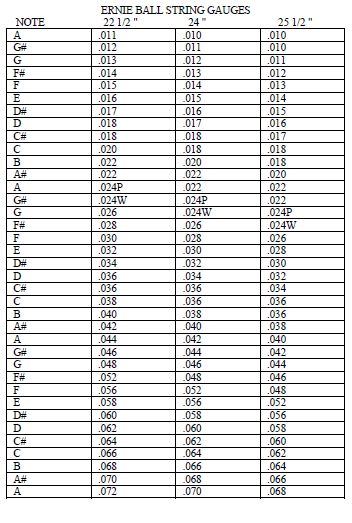
it looks like my C6 strings will work ?? ?? yes / no ??CrowBear Schmitt wrote:Open E Tuning is good to start with Richard, especially if you already play guitbox
High
1 E
2 B option : C#
3 G# option G for minor
4 E option D dom7 back up chord
5 B
6 E
Low
having both the 6 C# & the dom7 D makes a nice 13th chord
-
Bill Brunt
- Posts: 204
- Joined: 23 Feb 2011 2:34 pm
- Location: Texas, USA
- State/Province: Texas
- Country: United States
C6 and easy never belong in the same sentence. Seriously.
A6, low to hi - A, C#, E, F#, A, C#, E
will give you the 6th tuning you want for Western Swing, Hawaiian, as well as some pretty jazzy stuff.
It is WAY easier to learn the harmonized scales on, esp 3rds. WAY!
Look at Herb Remington and Rick Alexander you tube videos. the late, great Rick Alexander even still has some pretty good video tutorials free on the web.
Did I say WAY easier?
Learning them in A6 will also make learning C6 easier, as they have some things in common.
Bill
A6, low to hi - A, C#, E, F#, A, C#, E
will give you the 6th tuning you want for Western Swing, Hawaiian, as well as some pretty jazzy stuff.
It is WAY easier to learn the harmonized scales on, esp 3rds. WAY!
Look at Herb Remington and Rick Alexander you tube videos. the late, great Rick Alexander even still has some pretty good video tutorials free on the web.
Did I say WAY easier?
Learning them in A6 will also make learning C6 easier, as they have some things in common.
Bill
-
Richard Lahr
- Posts: 59
- Joined: 3 Apr 2013 8:10 am
- Location: Gulf Cove Florida, USA
- State/Province: Florida
- Country: United States
-
Stephen Abruzzo
- Posts: 1183
- Joined: 20 Jan 2009 5:34 pm
- Location: Philly, PA
- State/Province: Pennsylvania
- Country: United States
Well....since your Open G dobro tuning is lo-to-hi; G-B-D-G-B-D.....just tune the low D up to E and get; lo-to-hi; G-B-E-G-B-D.....which is a G6 tuning with a full minor and minor 7 chord all together with no string skips.Richard Lahr wrote: Nope... know nothing about playing regular guitar..only pickin my open G dobro
This will at least give you the flavor of the possibilities of a 6th tuning. This way you get to keep the same strings.
Then, if you like the G6, you can branch off into C6/A7 (lo-to-hi; C#-E-G-A-C-E)
-
Jim Williams
- Posts: 1011
- Joined: 17 Mar 2013 9:06 am
- Location: Meridian, Mississippi, USA - Home of Peavey!
- State/Province: Mississippi
- Country: United States
-
Bill Brunt
- Posts: 204
- Joined: 23 Feb 2011 2:34 pm
- Location: Texas, USA
- State/Province: Texas
- Country: United States
-
Jim Williams
- Posts: 1011
- Joined: 17 Mar 2013 9:06 am
- Location: Meridian, Mississippi, USA - Home of Peavey!
- State/Province: Mississippi
- Country: United States
Learning what Doug mentioned in a previous post about skipping the third string in C6 (unless you want the sound it produces) helps me play along with a lot of music more easily. I may give A6 a try too though, sounds interesting.
GFI SM10 3/4, 1937 Gibson EH-150, 2 - Rondo SX Lap Steels and a Guyatone 6 String C6. Peavey 400 and a Roland 40 Amps. Behringer Reverb Pedal.
-
Jim Williams
- Posts: 1011
- Joined: 17 Mar 2013 9:06 am
- Location: Meridian, Mississippi, USA - Home of Peavey!
- State/Province: Mississippi
- Country: United States
-
Stephen Cowell

- Posts: 3064
- Joined: 6 Jan 2012 8:13 am
- Location: Round Rock, Texas, USA
- State/Province: Texas
- Country: United States
Absolutely not... C6 only spans 1.3 octaves, E spans 2. Your G dobro spans 1.5... all these tunings have to be re-strung to be the others. There are other problems having to do with string-to-string spacing of notes (E has that big fifth interval on the bottom) as well as absolute pitch (C and E are very far apart, G too). For guitarists moving to lap, E is the best tuning to start with... it also can be re-tuned to A easily. The Jerry Byrd course starts you in E, then moves you to A, IIRC. Look at a tuning as a pattern, not as absolute pitch... A6/C6/G6 same tuning, in effect, if the pattern is the same.Richard Lahr wrote: it looks like my C6 strings will work ?? ?? yes / no ??
You've got two guitars, one in G, one in C6... this is good. Play stuff in G, then move it to C6... don't play the same pitches, play the same places on the fretboard... you'll see where skipping the 3rd string comes into play.
If you want to play 'country' you'll end up with a pedal steel guitar... might as well build your skills on the lap ones first, or you'll be *very* frustrated on PSG. Get to where you can pick out a melody by hearing it... your ears need to be trained as well as your hands. Start with Mary Had A Little Lamb... move to Twinkle Twinkle Little Star... when you can play a decent Rudolph The Red-Nosed Reindeer you're ready to get that PSG.
Lessons will speed you up 30x... a written course (Jerry Byrd etc) will speed you up 10x. What kind of course are you following now?
Too much junk to list... always getting more.
-
Richard Lahr
- Posts: 59
- Joined: 3 Apr 2013 8:10 am
- Location: Gulf Cove Florida, USA
- State/Province: Florida
- Country: United States
Been starting with the Sierra Lessons with Joe Wright... he uses an 8 string but has good point I guess. peaked at Lessons with Troy but hadn't bought any.. no spare cash right now.Stephen Cowell wrote:Absolutely not... C6 only spans 1.3 octaves, E spans 2. Your G dobro spans 1.5... all these tunings have to be re-strung to be the others. There are other problems having to do with string-to-string spacing of notes (E has that big fifth interval on the bottom) as well as absolute pitch (C and E are very far apart, G too). For guitarists moving to lap, E is the best tuning to start with... it also can be re-tuned to A easily. The Jerry Byrd course starts you in E, then moves you to A, IIRC. Look at a tuning as a pattern, not as absolute pitch... A6/C6/G6 same tuning, in effect, if the pattern is the same.Richard Lahr wrote: it looks like my C6 strings will work ?? ?? yes / no ??
You've got two guitars, one in G, one in C6... this is good. Play stuff in G, then move it to C6... don't play the same pitches, play the same places on the fretboard... you'll see where skipping the 3rd string comes into play.
If you want to play 'country' you'll end up with a pedal steel guitar... might as well build your skills on the lap ones first, or you'll be *very* frustrated on PSG. Get to where you can pick out a melody by hearing it... your ears need to be trained as well as your hands. Start with Mary Had A Little Lamb... move to Twinkle Twinkle Little Star... when you can play a decent Rudolph The Red-Nosed Reindeer you're ready to get that PSG.
Lessons will speed you up 30x... a written course (Jerry Byrd etc) will speed you up 10x. What kind of course are you following now?
-
Bill Creller
- Posts: 3740
- Joined: 29 Oct 2002 1:01 am
- Location: Saginaw, Michigan, USA (deceased)
- State/Province: Michigan
- Country: United States
Like many folks who started with A major, I went to E major quite soon after, which was much easier for playing the country music of the 40s when I started.
Then in the late 40s, I "discovered" C6th, and never looked back...best all-around tuning, and well worth the effort to work on until you figure it out.
But E major may help get there.....
Then in the late 40s, I "discovered" C6th, and never looked back...best all-around tuning, and well worth the effort to work on until you figure it out.
But E major may help get there.....