Hello, everybody!
Here is my question. If a Sho-Bud has "Distributed by Bawldwin" in the lower, right-hand corner,does it automaticly qualify as a collectable? AS I understand it, some of these could be fakes. How do you tell the difference? If it's the "real thing", and in reasonable condition, what's it worth? What year-model Bawldwin's were the best? Thank's for the help.
Mitch
Sho-Bud Question
Moderator: Dave Mudgett
-
Mitch Ellis
- Posts: 715
- Joined: 22 May 2006 12:01 am
- Location: Collins, Mississippi USA
- State/Province: Mississippi
- Country: United States
-
Kyle Everson
- Posts: 851
- Joined: 20 Mar 2006 1:01 am
- Location: Nashville, Tennessee
- State/Province: Tennessee
- Country: United States
Does it have a crossover mechanism to switch the pedals and knee levers between the necks? It is usually located on the side where the player sits. If you post a picture, I'm sure someone will be able to tell you more about the guitar.
------------------
Kyle Everson
Sho-Bud Pro-II
Fender Twin Reverb
Goodrich 120
------------------
Kyle Everson
Sho-Bud Pro-II
Fender Twin Reverb
Goodrich 120
-
Chris LeDrew

- Posts: 6407
- Joined: 27 May 2005 12:01 am
- Location: Canada
- State/Province: -
- Country: United States
Hi Mitch,
I can't help but smile reading your post. I think my thread about 3 weeks ago may have sparked this inquiry:
http://steelguitarforum.com/Forum5/HTML/013384.html
I learned a hell of a lot about Baldwin Sho~Buds through the interesting twists and turns of that thread. I may not be 100% accurate on all I profess here now, so I stand to be corrected.
It's safe to say that the majority of D-10's that have the Baldwin logo are Crossovers. (There are other features that are consistent with this model as well, but that's just a general statement.) As Kyle mentioned already, the Crossover has a lever on the back of the guitar, near the tuning keys, which is used to switch the mechanism underneath so the pedals work on both necks. It didn't work very well for most players. Most of these were made in the mid-to-late Sixties. My assessment is that they are generally not worth a lot of money because of their unreliable mechanics. Some of them have been modified to work both necks separately, and some players still use them in this capacity. This type of Sho~Bud is generally the one that gets the least amount of respect. It has a cast-iron frame that contibutes to its 90-pound weight in the case, and its electronics were known to be noisy and microphonic. The only thing it had going for itself back in the day, apparently, was its other-worldly tone.
As far as some of them being fakes, I don't know anything about that. Lloyd Green mentioned that he has seen some fakes over the years. A pic of the guitar sent to Bobbe will quickly confirm or dispel the fake issue, if you are looking at a particular guitar.
Those who have read my old thread know that my Baldwin is a little different. First of all, it is 8+3, whereas standard Crossovers were 6+1. It has a regular rack and barrel set up, much like the first Professionals. Therefore, it works better than a traditonal Crossover. It also holds some historical interest in that it was one of only a few made in a critical Sho~Bud transition period out of the Crossovers and into the Professionals. Having said that, there are also Baldwins out there with a more Professional-type body like the one Lloyd has in the photo, as well as fellow forumite Bruce Hamilton in Vancouver. I think these were right on the verge of the Professional coming out. I'm not sure about the worth of these models, but they sure look nice and I bet they sound amazing too.
In short, my advice would be not to pay a whole lot for a Baldwin Crossover unless you intend to modify the undercarriage. Even then, you're looking at a huge weight issue at 90 pounds in the case. On the positive side, if you get one for really cheap and get John Coop to do a complete conversion on it, you will have (IMHO) a tone monster that will raise the hairs on the back of your neck with its wonderful sustain, right up to the 24th fret. My Baldwin is like nothing I've ever heard tone-wise...isn't it, James? I played a few high notes over the phone for James Morehead the other night. He could even hear it through the receiver. It really is that amazing. There is a general consensus that the rich, haunting tone of these models is partly due to the cast iron frame. When you play the guitar, it resonates under your arms.
Please feel free to grade my Baldwin essay in any way you'd like.

<font size="1" color="#8e236b"><p align="center">[This message was edited by Chris LeDrew on 27 September 2006 at 08:04 PM.]</p></FONT>
I can't help but smile reading your post. I think my thread about 3 weeks ago may have sparked this inquiry:
http://steelguitarforum.com/Forum5/HTML/013384.html
I learned a hell of a lot about Baldwin Sho~Buds through the interesting twists and turns of that thread. I may not be 100% accurate on all I profess here now, so I stand to be corrected.
It's safe to say that the majority of D-10's that have the Baldwin logo are Crossovers. (There are other features that are consistent with this model as well, but that's just a general statement.) As Kyle mentioned already, the Crossover has a lever on the back of the guitar, near the tuning keys, which is used to switch the mechanism underneath so the pedals work on both necks. It didn't work very well for most players. Most of these were made in the mid-to-late Sixties. My assessment is that they are generally not worth a lot of money because of their unreliable mechanics. Some of them have been modified to work both necks separately, and some players still use them in this capacity. This type of Sho~Bud is generally the one that gets the least amount of respect. It has a cast-iron frame that contibutes to its 90-pound weight in the case, and its electronics were known to be noisy and microphonic. The only thing it had going for itself back in the day, apparently, was its other-worldly tone.
As far as some of them being fakes, I don't know anything about that. Lloyd Green mentioned that he has seen some fakes over the years. A pic of the guitar sent to Bobbe will quickly confirm or dispel the fake issue, if you are looking at a particular guitar.
Those who have read my old thread know that my Baldwin is a little different. First of all, it is 8+3, whereas standard Crossovers were 6+1. It has a regular rack and barrel set up, much like the first Professionals. Therefore, it works better than a traditonal Crossover. It also holds some historical interest in that it was one of only a few made in a critical Sho~Bud transition period out of the Crossovers and into the Professionals. Having said that, there are also Baldwins out there with a more Professional-type body like the one Lloyd has in the photo, as well as fellow forumite Bruce Hamilton in Vancouver. I think these were right on the verge of the Professional coming out. I'm not sure about the worth of these models, but they sure look nice and I bet they sound amazing too.
In short, my advice would be not to pay a whole lot for a Baldwin Crossover unless you intend to modify the undercarriage. Even then, you're looking at a huge weight issue at 90 pounds in the case. On the positive side, if you get one for really cheap and get John Coop to do a complete conversion on it, you will have (IMHO) a tone monster that will raise the hairs on the back of your neck with its wonderful sustain, right up to the 24th fret. My Baldwin is like nothing I've ever heard tone-wise...isn't it, James? I played a few high notes over the phone for James Morehead the other night. He could even hear it through the receiver. It really is that amazing. There is a general consensus that the rich, haunting tone of these models is partly due to the cast iron frame. When you play the guitar, it resonates under your arms.
Please feel free to grade my Baldwin essay in any way you'd like.
<font size="1" color="#8e236b"><p align="center">[This message was edited by Chris LeDrew on 27 September 2006 at 08:04 PM.]</p></FONT>
-
James Morehead
- Posts: 6944
- Joined: 19 May 2003 12:01 am
- Location: Prague, Oklahoma, USA - R.I.P.
- State/Province: Oklahoma
- Country: United States
-
Chris LeDrew
- Posts: 6407
- Joined: 27 May 2005 12:01 am
- Location: Canada
- State/Province: -
- Country: United States
-
Bruce Hamilton
- Posts: 298
- Joined: 4 Aug 1998 11:00 pm
- Location: Vancouver BC Canada
- State/Province: -
- Country: United States
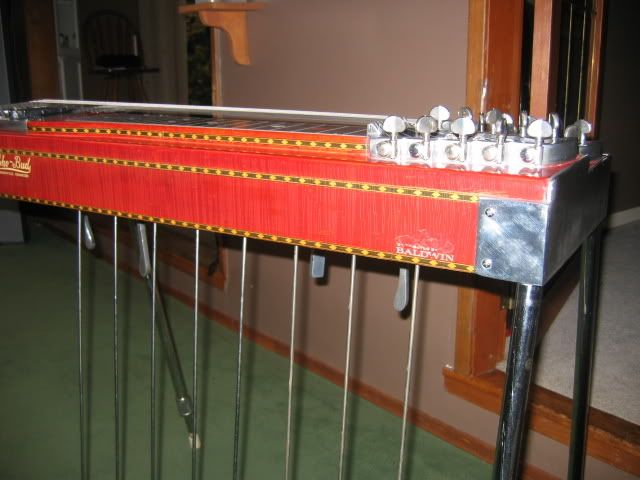
Here is my guitar which Chris mentioned. It is the best sounding Professional I have ever heard and plays like a dream. I recently purchased it and am thinking of selling it but I have been unable to determine what a fair price would be. Meanwhile the more I play this guitar the more I am starting to appreciate what a great guitar this is. 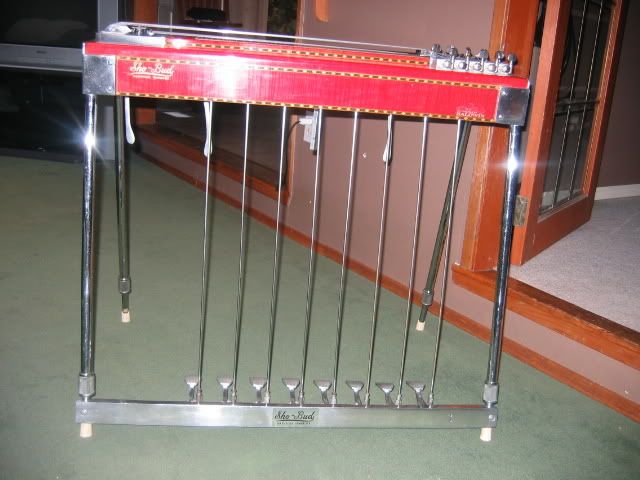
 size="1" color="#8e236b"><p align="center">[This message was edited by Bruce Hamilton on 27 September 2006 at 08:53 PM.]</p></FONT><font size="1" color="#8e236b"><p align="center">[This message was edited by Bruce Hamilton on 27 September 2006 at 09:00 PM.]</p></FONT><font size="1" color="#8e236b"><p align="center">[This message was edited by Bruce Hamilton on 27 September 2006 at 09:01 PM.]</p></FONT><font size="1" color="#8e236b"><p align="center">[This message was edited by Bruce Hamilton on 28 September 2006 at 11:30 PM.]</p></FONT>
size="1" color="#8e236b"><p align="center">[This message was edited by Bruce Hamilton on 27 September 2006 at 08:53 PM.]</p></FONT><font size="1" color="#8e236b"><p align="center">[This message was edited by Bruce Hamilton on 27 September 2006 at 09:00 PM.]</p></FONT><font size="1" color="#8e236b"><p align="center">[This message was edited by Bruce Hamilton on 27 September 2006 at 09:01 PM.]</p></FONT><font size="1" color="#8e236b"><p align="center">[This message was edited by Bruce Hamilton on 28 September 2006 at 11:30 PM.]</p></FONT>-
Jackie Anderson

- Posts: 520
- Joined: 17 Jun 2002 12:01 am
- Location: Scarborough, ME
- State/Province: -
- Country: United States
-
Mitch Ellis
- Posts: 715
- Joined: 22 May 2006 12:01 am
- Location: Collins, Mississippi USA
- State/Province: Mississippi
- Country: United States
I don't have a picture of the steel. In fact, it may never even come up for sale. I haven't seen it in a long time, and can't remember much about it. Chris, what would John Coop convert it to, and how would it help the tone? The one that Mr. Lloyd is setting behind...is it a crossover? What, exactly, (or maybe where) is the "wooden insert" Mr. Lloyd is talking about? The only wood I see is the neck and the front of the cabnet. You and Bruce both have beutiful steel's. I'm sorry for all the questions. Thank's for the help.
Mitch
Thank's for the help.Mitch
-
Ernie Pollock
- Posts: 2181
- Joined: 4 Aug 1998 11:00 pm
- Location: Mt Savage, Md USA
- State/Province: -
- Country: United States
Heres one I am still playing, of course the crossover does not work, but I have it rigged for 2 pedals on E9th & 4 on C6th, Its a riot to play!!
picture
As to noisy electronics, I have not suffered that yet, I do use a matchbox with it though, maybe that helps.
Ernie http://www.hereintown.net/~shobud75/stock.htm
------------------
picture

As to noisy electronics, I have not suffered that yet, I do use a matchbox with it though, maybe that helps.
Ernie
http://www.hereintown.net/~shobud75/stock.htm ------------------
-
Jackie Anderson
- Posts: 520
- Joined: 17 Jun 2002 12:01 am
- Location: Scarborough, ME
- State/Province: -
- Country: United States
Mitch, the conversion wouldn't help the tone -- the tone doesn't need any help! -- but it would improve the playability and keep the guitar in tune more stably.
I believe the "wooden insert" was a reference to the construction of the neck: on the Crossovers, the part around the pickup and changer is wood, all one piece with the rest of the neck. On later Sho-Buds, there is an aluminum casting in that area, supporting the changer fingers and surrounding the pickup, and then from there to the roller nut and tuner head is wood (that is, except for the Sho-Buds that have an all-metal neck).<font size="1" color="#8e236b"><p align="center">[This message was edited by Jack Anderson on 28 September 2006 at 06:47 AM.]</p></FONT><font size="1" color="#8e236b"><p align="center">[This message was edited by Jack Anderson on 28 September 2006 at 06:48 AM.]</p></FONT>
I believe the "wooden insert" was a reference to the construction of the neck: on the Crossovers, the part around the pickup and changer is wood, all one piece with the rest of the neck. On later Sho-Buds, there is an aluminum casting in that area, supporting the changer fingers and surrounding the pickup, and then from there to the roller nut and tuner head is wood (that is, except for the Sho-Buds that have an all-metal neck).<font size="1" color="#8e236b"><p align="center">[This message was edited by Jack Anderson on 28 September 2006 at 06:47 AM.]</p></FONT><font size="1" color="#8e236b"><p align="center">[This message was edited by Jack Anderson on 28 September 2006 at 06:48 AM.]</p></FONT>
-
Chris LeDrew
- Posts: 6407
- Joined: 27 May 2005 12:01 am
- Location: Canada
- State/Province: -
- Country: United States
Mitch,
John Coop is an expert at preserving the Sho~Bud sound while updating and improving on the worn, corroded and sometimes inferior undercarriage parts of many old Sho~Buds. In this case, he would strip the crossover mechanism and replace the undercarriage with a newer, better system consisting of his own hand-made and tooled parts. The pedals and levers will be smooth and precise, and the tone would improve tremendously because of his attention to detail when it comes to a tight, secure, stable undercarriage that doesn't rattle or have any slack. Email him and ask for pics of his work. (Hope I got all that right, Coop!)
Neither mine, Lloyd's former guitar, nor Bruce's is a Crossover. They're all transition models from the era when Sho~Bud was phasing out the Crossover mechanism. They're all-pull rack and barrel systems.
John Coop is an expert at preserving the Sho~Bud sound while updating and improving on the worn, corroded and sometimes inferior undercarriage parts of many old Sho~Buds. In this case, he would strip the crossover mechanism and replace the undercarriage with a newer, better system consisting of his own hand-made and tooled parts. The pedals and levers will be smooth and precise, and the tone would improve tremendously because of his attention to detail when it comes to a tight, secure, stable undercarriage that doesn't rattle or have any slack. Email him and ask for pics of his work. (Hope I got all that right, Coop!)
Neither mine, Lloyd's former guitar, nor Bruce's is a Crossover. They're all transition models from the era when Sho~Bud was phasing out the Crossover mechanism. They're all-pull rack and barrel systems.
-
Chris LeDrew
- Posts: 6407
- Joined: 27 May 2005 12:01 am
- Location: Canada
- State/Province: -
- Country: United States
I stand corrected. Yes, Jack is right. The guitar won't need much help tone-wise, but the conversion would make it playable in the first place, and would sure up all the loose and flappy action that does kill tone in older instruments. As a Crossover, you wouldn't get full enjoyment out of the tone because you'd contantly be fooling with the tuning.
-
James Morehead
- Posts: 6944
- Joined: 19 May 2003 12:01 am
- Location: Prague, Oklahoma, USA - R.I.P.
- State/Province: Oklahoma
- Country: United States
All though, the tone is AREADY great in these guitars, the slack(loose-ness) between the individual parts of the old mechanism tend to dampen tone/volume. So John Coop, by using maximum precision to create tightness of the parts, actually helps bring out ALL the tone/resonance that's possible out of an individual guitar, thus bringing out it's maximum potential. It's simple: remove the slackness, and the guitar will resonate(vibrate) better, thus the tone is improved in this manner. I think that's what Chris was trying to say.  So to answer that question, YES, John Coop's conversion WILL improve the tone.<font size="1" color="#8e236b"><p align="center">[This message was edited by James Morehead on 28 September 2006 at 07:41 AM.]</p></FONT>
So to answer that question, YES, John Coop's conversion WILL improve the tone.<font size="1" color="#8e236b"><p align="center">[This message was edited by James Morehead on 28 September 2006 at 07:41 AM.]</p></FONT>-
Chris LeDrew
- Posts: 6407
- Joined: 27 May 2005 12:01 am
- Location: Canada
- State/Province: -
- Country: United States
-
John Billings

- Posts: 9344
- Joined: 11 Jul 2002 12:01 am
- Location: Ohio, USA
- State/Province: Ohio
- Country: United States
-
Jackie Anderson
- Posts: 520
- Joined: 17 Jun 2002 12:01 am
- Location: Scarborough, ME
- State/Province: -
- Country: United States
-
Mitch Ellis
- Posts: 715
- Joined: 22 May 2006 12:01 am
- Location: Collins, Mississippi USA
- State/Province: Mississippi
- Country: United States
-
Chris LeDrew
- Posts: 6407
- Joined: 27 May 2005 12:01 am
- Location: Canada
- State/Province: -
- Country: United States
There's one on auction about to be wrapped up on Ebay. It's here in Canada. It looks pretty beat. I emailed the seller and gave him some info but he didn't post it. It looks like it's been through the war.
It's sad and appalling how some pedal steels get treated with such disrespect and neglect. I guess they end up the hands of non-players who just let them go to pot over time. It's really too bad.
It's sad and appalling how some pedal steels get treated with such disrespect and neglect. I guess they end up the hands of non-players who just let them go to pot over time. It's really too bad.
-
James Morehead
- Posts: 6944
- Joined: 19 May 2003 12:01 am
- Location: Prague, Oklahoma, USA - R.I.P.
- State/Province: Oklahoma
- Country: United States
-
Darryl Hattenhauer

- Posts: 1725
- Joined: 16 Nov 2005 1:01 am
- Location: Phoenix, Arizona, USA
- State/Province: Arizona
- Country: United States
-
Chris LeDrew
- Posts: 6407
- Joined: 27 May 2005 12:01 am
- Location: Canada
- State/Province: -
- Country: United States
-
Darryl Hattenhauer
- Posts: 1725
- Joined: 16 Nov 2005 1:01 am
- Location: Phoenix, Arizona, USA
- State/Province: Arizona
- Country: United States
-
Chris LeDrew
- Posts: 6407
- Joined: 27 May 2005 12:01 am
- Location: Canada
- State/Province: -
- Country: United States
It sure feels like that playing them...ha-ha! Only I've never had a car clutch as hard to engage as the RKR on my Baldwin. I actually like having to put some physical exertion into the pedals and levers. You can really feel the guitar vibrating on a rack and barrel - it seems like the tone is locked into the stiff pulls.....hard to explain.
-
James Morehead
- Posts: 6944
- Joined: 19 May 2003 12:01 am
- Location: Prague, Oklahoma, USA - R.I.P.
- State/Province: Oklahoma
- Country: United States
Well Chris, I understand what you are saying. Those hard pulls tighten up that part of the mechanism, thus it doesn't "dampen" your tone/sound. Just think if those parts "stayed" tight and still played easy like butter. But then we'd be talking Coop's parrts! HA! By the way, I think I might put knee levers in my pickup for turn signals----hows that for redneck???? Maybe be a boowah pedal on the floor. Thus the Chevy C6th is born. 