Great story, Ken. I absolutely endorse the last line too. Given the huge number of options for finding the same note, and even the same chord, an appreciation of dynamics, string choice etc is crucial.
And I don't know how that could be written in standard notation. I liked Bill's bit about "only if in English". All this Italian stuff.....
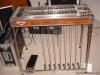
Williams 700 series keyless U12,
Sierra keyless U14, Eezzee-Slide & BJS bars
Moth-eaten old Marshall 150 combo
Roland Cube 80XL, Peterson Strobo+HD,
EarthQuaker Despatch Master for reverb / delay
Sight reading is a skill. I can read music, my wife can sight read music (you could swat flies on staff paper and she could play it the first time through).
Sight reading is an important ability for anyone that needs to sit in with a group and get the notes right in very short order IE: Studio Musicians & Jingles.
I'm guessing that most members of this forum do not need to ramp up songs in short order, so sight reading is probably not necessary. That said, I believe the ability to read music is important as it lends a basic vocabulary to musicians that can ease communication between band members.
I'm not trying to nit pick here, just suggesting that the vocabulary of this post would benefit from the definition of terms.
Mostly junque with a few knick-knacks that I really can't do without!
Sight reading doesn't give me the best positions. I sight read (slowly) to memorize the melody, but stay within 2 frets. For example, something in C I would probably read at the 8th and 10th frets. Once I've got it in my head, I start exploring other ways to play it. Then I mark up the sheet with fret numbers and pedal letters for the next time. When I come back to it, I play it better.
The purpose of written music is to remember specific notes. A unique melody twist is often what makes a song. My memory isn't so good that I can remember them all. Knowing how to read and write is a Very Good Thing, even if you never become an expert at it.
My sight reading is an automatic "Two Step Process".
My eyes see, my brain plays it internally, and I can play what I hear in my head. (3 steps?)
It works for me enough to give the impression that I am a sight reader. It doesn't work for complex chordal passages. I just avoid those, or play the top note or two. I always need to scan the document first, and don't expect perfection.
It's still good enough to have producers I deal with not complain. I'm quite aware that a skilled perfectionist would not be impressed.
Lane Gray wrote:FWIW, Rusty Young's pedal steel instruction book used standard notation. Rusty believed that it would be a good thing to know how to read.
Same with the Mel Bay book - notation optional but highly recommended.
Make sleeping dogs tell the truth!
Homebuilt keyless U12 7x5, Excel keyless U12 8x8, Williams keyless U12 7x8, Telonics rack and 15" cabs
Well bob's sniffin' at it in a way that makes me wanna poke it again to see if it's real dead - "Sight-reading" could actually be a hindrance on steel guitar, if this mythical session/producer/big star wanted the best possible sounding steel guitar part. I mean, I could easily envision a path towards "sight-reading" a fairly common-type, major/minor single-note melody on C6th no-pedal tuning. "Mary Had a Little Lamb" in C Major? I can do that already. But I would come up with something a lot stronger if I had the written melody to work on for a few hours first.
David Mason wrote:
"Sight-reading" could actually be a hindrance on steel guitar, if...I would come up with something a lot stronger if I had the written melody to work on for a few hours first.
It's not the reading that is a hindrance. It's the producer insisting on using your first take over your stringent objection.
What Jim Cohen said....
I recently sat down to read a Was Montgomery tune to sit in with a friends jazz band, and after about an hour I had a spitting headache.
I ended up reading the parts I couldn't make out by ear, and ear learned the rest.
Yair, good luck with playing some of Wes Montgomery just by ear. Unfortunately sometimes it's not real easy reading either.
A feature of being able to read that's never mentioned is the ability to look at a transcription and hear it in your head before ever playing it on an instrument. After a time it just becomes automatic to be able to do that. No great skill involved.
One way to use that is to do a search online for something like "bop licks". Lots of written stuff available, some of it really good and worth remembering. Since you will pretty much know what it sounds like upfront, it also helps in rejecting what's not what you might want to learn and use in your playing style.
34% of the respondents stated they could read music and play the PSG from standard notation. WOW!!!!!!!! I never thought it would be that high. My hat is off to you guys!!!! Impressive!!!
GFI Ultra SD-10; Nashville 112; Hilton pedal, George L Cables; Pearse bar; Live Stings;Walker seat by Billy Knowles.
I think the degree of expertise is not evident. I can pick melody phrases from typical scores albeit at a relatively simplistic level (home base, plus or minus a few frets), but voted no, because the skill is more residual from prior musical experience than specifically developed and honed for the steel.
That said, don't underestimate the commitment, musical training and brains behind committed steel players...it's said to be one of the most difficult instruments to 'master' and that requires a lot of different angles and approaches to get it figured out...one third would. actually seem about right.
The 5 percent who claim expertise, are likely some of the top players that circulate on the forum, but probably that play 'outside' genres, like classical, etc, where scored music is more 'normal'...just speculating of course.
That said many of the options have an attitudinal component with respect to sight reading and that may be more interesting anyways in terms of results.
When I first started to learn the instrument my teacher taught me to read music from the page. As a teacher myself I have had several students who wished to earn to read sheet music so I taught them that way. After developing my ear I have drifted away from reading and prefer to play by ear. If I encounter a song that I'm not sure of I purchase the sheet music and get it in my head then I discard the sheet music. I much prefer to play what I feel than whats written. So my ability to sight read has suffered quite a bit.
34% of Forum members can sit down to a jazz fakebook and accurately read single note melodies for bebop tunes accurately the first time?????????
Gotta call BS
sorry
Most steel players in working bands NEVER see a sheet of standard notation on the bandstand in 40 or even 50 years of playing.
Like most steel players I know, I'm familiar with standard notation enough to sight read 'Mary Had a Little Lamb' in the key of C, SLOWLY, but as soon as you're in Ab and the tune is 'Oleo', all bets are off for me. Give me an hour and I'll figure it out, but that is NOT SIGHT READING.
There was no specification that reading from a jazz fakebook, or eight staff orchestral score Was the threshold on sight reading capability.
There was nothing saying that the melodies like "Mary had a little lamb" are not sufficient. Although anyone who would vote "proficient" at that level couldn't really be called 'reasonable', either...
In fact Mary had a little lamb in the a+b position is a good exercise to affirm that the A pedal down is the third tone of the major scale...B down is the tonic, etc...so, if a player did that analysis enough on all manner of simple melodies, the fret board starts unraveling and voting for option b is reasonable.
Last edited by Tom Gorr on 17 Jul 2014 3:26 pm, edited 2 times in total.
I would also add that this is not a random sample of Forumites and hence one can draw no conclusions about "Forum Members" at large from it. There is almost certainly a self-selection bias in the sample. In other words, people who have an interest in the subject of the thread (sight-reading) will come to the thread, see the poll and be more likely to vote. By contrast, other Forumites who have no interest in sight-reading are less likely to even open the thread, and hence less likely to vote.
So, bottom line is, 34% of those who showed up and voted say they have at least some minimal level of music notation reading ability. As Tom points out, what that means to each person probably varies greatly.
Last edited by Jim Cohen on 17 Jul 2014 7:36 pm, edited 1 time in total.
A ditto for me to Larry's and (both) of Cohen's posts. I can read (on steel) enough to learn or absorb the material, but definitely not up to speed. Just not enough practice. I am rarely faced with a stack of notation at Theatre jobs like the various Patsy shows, and (very rarely) a jingle session. New York or LA would eat me alive, but here I've gotten by fine by telling the MD i'm not a fast reader, and if they're ok with my interpretation or a closer approximation after some homework, we're golden, if they need it spot on at speed, I'm not capable.
I assumed that was what was meant by "sight reading" here, but I'm getting more confused post by post (!)
I will add that much of what I've seen notated for steel was either overly simplistic, compared to what we're capable of playing, or nearly impossible to play as written. An exception is the original score for "Always Patsy Cline" which appears to be transcriptions of a very well-played steel part. Lots of good stuff in that one.
For me one of the great assets to reading is being able to swipe stuff from other instruments or genres. Charlie Christian and most trombone music come to mind.
I'm curious to know what the P & W steel players are expected to have for reading capability..those hymm books aren't so hard to sight sing from...or are churches with steel players more into contemporary music?
There was a time when I could sit down in a few minutes and work out a song from a lead sheet, but I could never do chords that way. Since I can play just about any melody I hear right off, I've often thought a better way to approach the whole thing would be to learn to sing right off a lead sheet. If I could sight read and sing, I'd have no trouble doing the same on steel.
Somtimes at the Opry, Tommy will have sometype of music on his music stand; does anyone know exactly what that may be ----standard notation, chord progressions, or what?
GFI Ultra SD-10; Nashville 112; Hilton pedal, George L Cables; Pearse bar; Live Stings;Walker seat by Billy Knowles.