Do Some Instrumentals Become Stumbling Blocks?
Moderators: Dave Mudgett, Brad Bechtel
-
Bill Hankey
- Posts: 7666
- Joined: 13 Apr 2001 12:01 am
- Location: Pittsfield, MA, USA
- State/Province: -
- Country: United States
A "capo" is a separate entity. It's immaterial and dissimilar to the construction of a guitar. The two do not go together, like a hand in a soft leather glove. When you think about it, it's appearance is more or less of a shabby appearing contrivance. I can't imagine wanting to distort the bell like tones of a vintage Martin guitar by dampening the tones with a capo.
-
Archie Nicol R.I.P.

- Posts: 6829
- Joined: 25 Aug 2004 12:01 am
- Location: Ayrshire, Scotland
- State/Province: -
- Country: United States
-
Dave Harmonson
- Posts: 1820
- Joined: 21 Dec 2006 1:01 am
- Location: Seattle, Wa
- State/Province: Washington
- Country: United States
-
Bill Hankey
- Posts: 7666
- Joined: 13 Apr 2001 12:01 am
- Location: Pittsfield, MA, USA
- State/Province: -
- Country: United States
-
Bud Angelotti

- Posts: 1417
- Joined: 6 Oct 1999 12:01 am
- Location: Larryville, NJ, USA
- State/Province: -
- Country: United States

-
Barry Blackwood

- Posts: 7350
- Joined: 20 Apr 2005 12:01 am
- State/Province: -
- Country: United States
Bill, you have essentially just described yourself.Barry,
I thrive on memories of working with lay or negative people who will never concede to the fact that they are a few fries short of a happy meal in a problem solvers workshop. Some are so habitually prone to believing that they have all the answers, no amount of disproving by pointing out their errors will convince them otherwise.

-
Earnest Bovine
- Posts: 8374
- Joined: 4 Aug 1998 11:00 pm
- Location: Los Angeles CA USA
- State/Province: -
- Country: United States
Re: I can surely relate..........
Elvis helped me with my drawl too.Ray Montee wrote:Elvis Presley helped my musical withdrawl immeasureably.
-
Tracy Sheehan
- Posts: 1383
- Joined: 24 Sep 2003 12:01 am
- Location: Fort Worth, Texas, USA
- State/Province: Texas
- Country: United States
Re: use of capo.
I probably did hang out in different places as you as i started playing pro fiddle in the 40s and took up steel in the 50s. I played in over 45 states on the road and some sit downs for a while plus over seas tours.I try and not name any one who i worked with unless for a good reason as i am not a name dropper, rather try not not be.I was doing it for a living not to brag that i worked with so and so.Lane Gray wrote:Tracy Sheehan wrote:As a fiddle player also when i played blue grass in Tn.back in the 50s the guy playing the Martin guitar always used a capo at times as did all other guitar players as needed.Playing rhythm one gets a much fuller sound using a capo for instance,playing in the key of F using a capo and playing in what was called an open chord position. George Jones did many of his songs in F# and capoed to play in an open chord position for the more full sound.
As for my self i never heard the subject of using capos being brought up before the advent of computers. Tracy
You musta hung out in different places than I.
Back in the 70s, when the only computer user I knew was Ben Eldridge (I never have learned exactly what a "computer mathematician" did, but Ben was one), there were a handful of musicians in the performing bluegrass world that called the capo a "cheater's rig." I can only assume whoever they were (sorry, I was a kid, don't recall who) played mando, or was Jim Eanes: he played sock rhythm and the only times I remember him forming a G chord was to play a G run.
I really don't understand what the flap is over capos as they were only a tool like pedals and all the other effect units for steel. Sheesh.LOL. Tracy
-
Bud Angelotti
- Posts: 1417
- Joined: 6 Oct 1999 12:01 am
- Location: Larryville, NJ, USA
- State/Province: -
- Country: United States
-
Bill Hankey
- Posts: 7666
- Joined: 13 Apr 2001 12:01 am
- Location: Pittsfield, MA, USA
- State/Province: -
- Country: United States
Tracy,
Wouldn't you say that the "capo" inherently is in direct conflict with the preservation of a fine musical instrument? Any device that lessens the quality of a musical instrument by alternately annihilatng a designated pitch, is apt to be a proving ground for wear and tear. It smacks of the typical jack-of-all-trades rushing to assist in a major plumbing problem, with his trusty slip jaw pliers. Occasionally, such problems blossom into irreversible damages, with the end result producing irksome permanent damages; if left to chance. Gimmickries invariably and ultimately end up leaving their tracks behind.
Speaking of gimmicks, surely, after playing in 45 states earlier, during your heydays, you must have met Jerry Byrd in your travels. He avoided the pedals, and I'm still trying to learn the reasons for Jerry taking that course of action.
Wouldn't you say that the "capo" inherently is in direct conflict with the preservation of a fine musical instrument? Any device that lessens the quality of a musical instrument by alternately annihilatng a designated pitch, is apt to be a proving ground for wear and tear. It smacks of the typical jack-of-all-trades rushing to assist in a major plumbing problem, with his trusty slip jaw pliers. Occasionally, such problems blossom into irreversible damages, with the end result producing irksome permanent damages; if left to chance. Gimmickries invariably and ultimately end up leaving their tracks behind.
Speaking of gimmicks, surely, after playing in 45 states earlier, during your heydays, you must have met Jerry Byrd in your travels. He avoided the pedals, and I'm still trying to learn the reasons for Jerry taking that course of action.
-
Bob Simons
- Posts: 604
- Joined: 18 Feb 2008 11:25 am
- Location: Kansas City, Mo, USA
- State/Province: Kansas
- Country: United States
1) Capos are just another tool. Generally not needed but useful in special applications like preserving a particularly familiar nut-position finger-style arrangement for a singer who needs a different key. Capos are common in Flamenco. (If it is good enough for Carlos Montoya it's good enough for me!)
2) With all due respect to Chet Atkins, he was a very good country picker, but his right hand technique on a nylon stringed guitar was kindergarten at best. From the perspective of a classical guitar player, the right hand controls widely varied intonation, tone, and attack and blocking characteristics of the note, and it CAN'T BE DONE WITH A THUMB PICK! Chet used only a small part of the palette and technique available to the nylon string guitarist.
2) With all due respect to Chet Atkins, he was a very good country picker, but his right hand technique on a nylon stringed guitar was kindergarten at best. From the perspective of a classical guitar player, the right hand controls widely varied intonation, tone, and attack and blocking characteristics of the note, and it CAN'T BE DONE WITH A THUMB PICK! Chet used only a small part of the palette and technique available to the nylon string guitarist.
Zumsteel U12 8-5, MSA M3 U12 9-7, MSA SS 10-string, 1930 National Resonophonic, Telonics Combo, Webb 614e, Fender Steel King, Mesa Boogie T-Verb.
-
Chuck Thompson
- Posts: 842
- Joined: 31 Jan 2007 5:04 pm
- Location: Illinois, USA
- State/Province: Illinois
- Country: United States
-
Bill Hankey
- Posts: 7666
- Joined: 13 Apr 2001 12:01 am
- Location: Pittsfield, MA, USA
- State/Province: -
- Country: United States
Bob Simons,
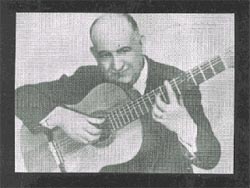
If I could refer to RAMON MONTOYA SALAZAR (1880-1949, to express my interest in flamenco style music on the guitar. He was born in a flamenco-playing Gypsy family. Nenown as a virtuoso player, it has been said that he was the greatest solo flamenco guitar player of all time. (I believe it!) He would hide in a closet as a child to learn how to play by listening to his father who would not allow him in the room while he was playing. Ramon was able to recreate from memory, the music his father played.
If I could refer to RAMON MONTOYA SALAZAR (1880-1949, to express my interest in flamenco style music on the guitar. He was born in a flamenco-playing Gypsy family. Nenown as a virtuoso player, it has been said that he was the greatest solo flamenco guitar player of all time. (I believe it!) He would hide in a closet as a child to learn how to play by listening to his father who would not allow him in the room while he was playing. Ramon was able to recreate from memory, the music his father played.
-
b0b

- Posts: 29079
- Joined: 4 Aug 1998 11:00 pm
- Location: Cloverdale, CA, USA
- State/Province: -
- Country: United States
-
Bill Hankey
- Posts: 7666
- Joined: 13 Apr 2001 12:01 am
- Location: Pittsfield, MA, USA
- State/Province: -
- Country: United States
b0b,
Thanks for posting the photo of Ramon. I'm not too sure of the percentages who are actively interested, when the subject among steel guitarists switches to flamenco guitar performances. It certainly makes me aware of what flamenco players can do with an insignificant amount of wood and six strings.
Thanks for posting the photo of Ramon. I'm not too sure of the percentages who are actively interested, when the subject among steel guitarists switches to flamenco guitar performances. It certainly makes me aware of what flamenco players can do with an insignificant amount of wood and six strings.
-
Dave Harmonson
- Posts: 1820
- Joined: 21 Dec 2006 1:01 am
- Location: Seattle, Wa
- State/Province: Washington
- Country: United States
-
Tracy Sheehan
- Posts: 1383
- Joined: 24 Sep 2003 12:01 am
- Location: Fort Worth, Texas, USA
- State/Province: Texas
- Country: United States
Re:
Jerry Byrd is one of the few steel players i never met. Sort Of like Tommy Morrell (who i did know) simply did not care for pedals. I might add neither needed them thats for sure.TracyBill Hankey wrote:Tracy,
Wouldn't you say that the "capo" inherently is in direct conflict with the preservation of a fine musical instrument? Any device that lessens the quality of a musical instrument by alternately annihilatng a designated pitch, is apt to be a proving ground for wear and tear. It smacks of the typical jack-of-all-trades rushing to assist in a major plumbing problem, with his trusty slip jaw pliers. Occasionally, such problems blossom into irreversible damages, with the end result producing irksome permanent damages; if left to chance. Gimmickries invariably and ultimately end up leaving their tracks behind.
Speaking of gimmicks, surely, after playing in 45 states earlier, during your heydays, you must have met Jerry Byrd in your travels. He avoided the pedals, and I'm still trying to learn the reasons for Jerry taking that course of action.
-
Ray Jenkins

- Posts: 2780
- Joined: 28 Jan 2000 1:01 am
- Location: Gold Canyon Az. U.S.A.
- State/Province: -
- Country: United States


-
Jeff Garden

- Posts: 3655
- Joined: 21 Aug 2003 12:01 am
- Location: Center Sandwich, New Hampshire, USA
- State/Province: New Hampshire
- Country: United States


-
Stephen Silver
- Posts: 813
- Joined: 24 Sep 2006 12:01 am
- Location: Asheville, NC
- State/Province: -
- Country: United States
Not only are those guys playing inferior instruments, but they absolutely must not be very good guitarists, cause they are all using capos.
Poor suffering fools. Perhaps if Bill could have knocked some sense into them, they would have actually learned how to properly address and play their inferior instruments.
Yea, and Tony Rice is a has been, washed up, can't play worth a damn guitarist who should probably get Bills help to get over his capo codependence.
Good thread Bill.......for a laugh.
S
Poor suffering fools. Perhaps if Bill could have knocked some sense into them, they would have actually learned how to properly address and play their inferior instruments.
Yea, and Tony Rice is a has been, washed up, can't play worth a damn guitarist who should probably get Bills help to get over his capo codependence.
Good thread Bill.......for a laugh.
S
Life is mostly Attitude and Timing
-
Brian Henry
- Posts: 3003
- Joined: 7 Oct 2000 12:01 am
- State/Province: -
- Country: United States
A Capo Is Just A Mobile Nut - Bill
A capo (short for capotasto, Italian for "head of fretboard") is a device used on the neck of a stringed (typically fretted) instrument to shorten the playable length of the strings, hence raising the pitch. It is frequently used on guitars, mandolins, and banjos. G.B. Doni first used the term in his Annotazioni of 1640, though capo use likely began earlier in the 17th-century.[1] The first patented capo was designed by James Ashborn of Walcottville, Connecticut, USA.[2]
The capo is most commonly used to raise the pitch of a fretted instrument so that a player can perform a piece in a certain key using different fingerings than they would use if played "open" (i.e. without a capo). In effect, a capo uses a fret of an instrument to create a new nut at a higher note than the instrument's actual nut. No matter the style, the capo is typically placed as close to the desired fret as possible, just behind the fret. This holds the strings down behind the fret as securely as possible with the sharpest possible angle to ensure they will remain fretted.
There are numerous styles of capos, but most commercial capos consist of a rubber-covered bar which holds down the strings of the instrument and is clamped to the instrument via one of a number of mechanisms. The same style of capo may be sold in different sizes and shapes for different instruments and fret-board curvatures.
The most relevant mechanical factors which vary by type of capo are their ease/method of use, their size and tendency to interfere with the player's hands, and their ability to hold down the strings uniformly without affecting the tuning of the instrument.
Capos have been used on many other stringed instruments, including relatives of the mandolin (such as the mandola and Greek bouzouki), and four-string banjos. There is a special two-piece capo available for the square-necked Dobro, or resonator guitar, which does not contact the neck, but clamps above and below the strings themselves.
The capo is most commonly used to raise the pitch of a fretted instrument so that a player can perform a piece in a certain key using different fingerings than they would use if played "open" (i.e. without a capo). In effect, a capo uses a fret of an instrument to create a new nut at a higher note than the instrument's actual nut. No matter the style, the capo is typically placed as close to the desired fret as possible, just behind the fret. This holds the strings down behind the fret as securely as possible with the sharpest possible angle to ensure they will remain fretted.
There are numerous styles of capos, but most commercial capos consist of a rubber-covered bar which holds down the strings of the instrument and is clamped to the instrument via one of a number of mechanisms. The same style of capo may be sold in different sizes and shapes for different instruments and fret-board curvatures.
The most relevant mechanical factors which vary by type of capo are their ease/method of use, their size and tendency to interfere with the player's hands, and their ability to hold down the strings uniformly without affecting the tuning of the instrument.
Capos have been used on many other stringed instruments, including relatives of the mandolin (such as the mandola and Greek bouzouki), and four-string banjos. There is a special two-piece capo available for the square-necked Dobro, or resonator guitar, which does not contact the neck, but clamps above and below the strings themselves.
LOOKOUT MOUNTAIN GEORGIA